
The Louisiana Court System
Louisiana runs its trial system on several tiers. District courts handle the big cases. Beneath them sit city, parish, mayor's, and justice-of-the-peace courts with limited authority, plus separate juvenile and family courts. Your traffic ticket may not even belong to a district court. Whatever court is named on the filing is the one to use for a docket search.
Appeals climb a second ladder. The First through Fifth Circuit Courts of Appeal review lower-court rulings, and the Louisiana Supreme Court sits above them all. Every appellate court keeps its own clerk and docket. For district filings and minutes, though, the Parish Clerk of Court is the usual holder. Some other courts use separate record keepers entirely.
| Louisiana Court Tier | Typical Work | Record Route |
|---|---|---|
| Louisiana Supreme Court | Highest appellate court. | Supreme Court clerk and separate case system. |
| Five Courts of Appeal | Appeals and writs. | Relevant circuit clerk; separate appellate docket. |
| District courts | General civil and felony work; assigned family, juvenile, or succession matters. | Parish Clerk of Court or local division. |
| Juvenile and family courts | Specialized matters. | Specialized or assigned clerk; access limits may apply. |
| Local limited courts | Traffic, ordinance, and limited civil or criminal matters. | Court named on the citation or filing. |
The Fourth Circuit search page separates appeals, dockets, opinions, and writs.
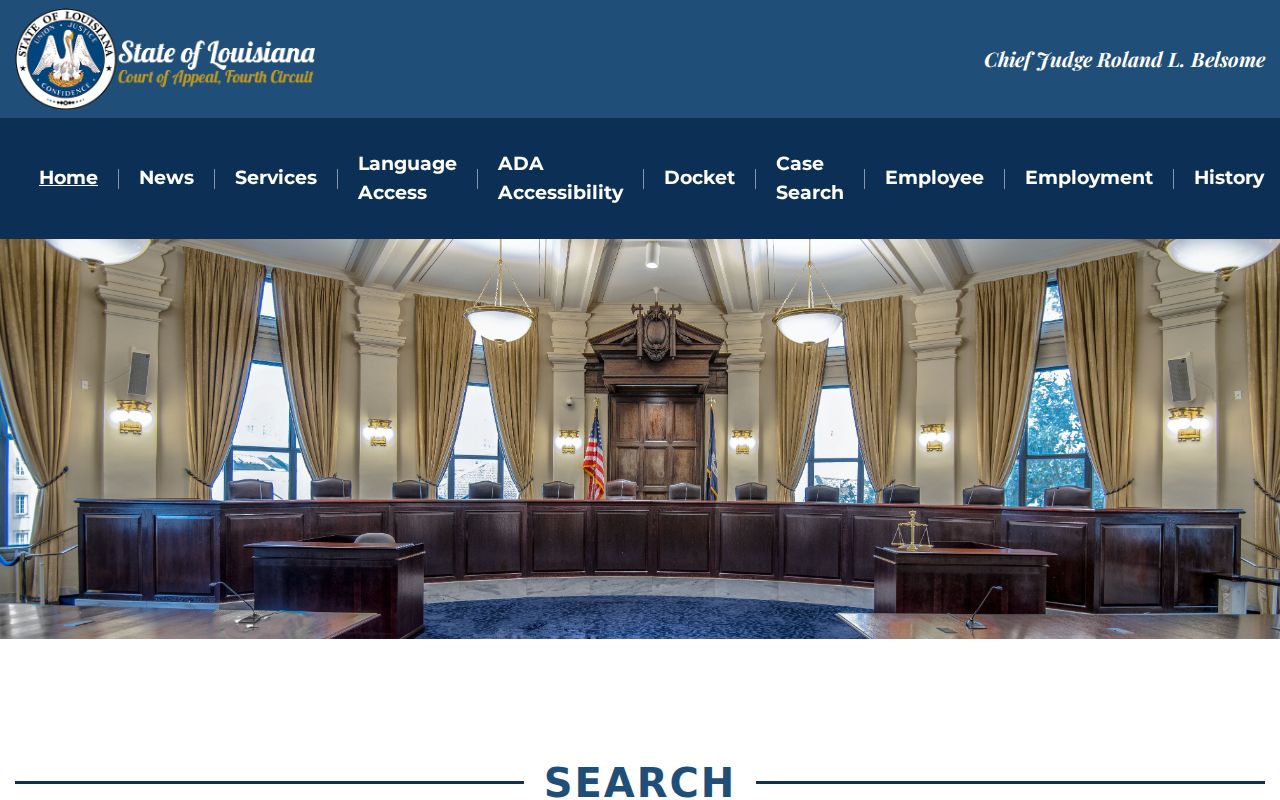
For an appeal, use the appellate court's search; for the trial record, go to the parish clerk.
Louisiana District Courts: 43 Units Across 42 Districts
Louisiana runs 43 district-court units spread over 42 numbered judicial districts. Why the mismatch? One district splits its work in two. A Civil District Court and a Criminal District Court sit in Orleans. Each keeps its own clerk.
Louisiana Supreme Court 2025 Annual Report gives the wider picture too. Beyond the district courts, it counts one Supreme Court, five Courts of Appeal, five juvenile or family courts, 48 city courts, three parish courts, and 369 state-court judges. Treat these as a map of the court structure. It is not a promise about which dockets any one search covers.
The report's annual statistics and its case-level docket access are separate services. Note: Court-unit counts describe the Louisiana structure, not the number of connected statewide search portals.
The Louisiana Statewide Case Search Portal
eClerks LA is the Louisiana Statewide Portal. It indexes listed land records, marriages, civil or family cases, and successions or probate across all 64 parishes. It is a wide net but not the final word. Parish coverage, years, and images vary, and local systems stay the official source.
Criminal minutes live behind a separate, login-gated search. The statute covers entries from 2020 forward. It skips traffic. And it does not require every filing image. Post-login civil fields and any statewide refresh schedule stay out of public view. For the full walk-through, see the Louisiana case search steps.
| Access Layer | What Is Documented | Limit to Keep in View |
|---|---|---|
| Index | Named civil and related categories across parishes. | Not a complete trial docket or image set. |
| Criminal minutes | Separate login-gated search for covered 2020+ cases. | Traffic and all-file images are excluded. |
| Documents | Some local links or paid images. | Fees and availability vary. |
| Refresh timing | No uniform schedule verified. | Ask the clerk to confirm current entries. |
Separate Louisiana Clerk Routes Can Change a Court Search
Which clerk holds a Louisiana court record depends on where the case sat. Parish Clerks of Court keep most district civil and criminal files. But that is not a fixed rule. Some local courts run their own offices. Orleans even splits the job. It has separate civil and criminal district clerks, and city, parish, mayor’s, and justice-of-the-peace courts may each have their own clerk too.
One judicial district can span more than one parish. That is why the smart first move is reading the court and division printed on the case papers. The Louisiana Secretary of State’s Clerk of Court directory will point you to parish offices, though it does not track every local court clerk.
Orleans shows how the split works in practice. An Orleans civil case belongs with the Civil District Court Clerk. A felony case belongs with the Criminal District Court Clerk. The Civil Clerk’s site spells out that local scope.
Note: a parish name alone may not tell you which district court or office holds the Louisiana case you want.
How Dockets Flow From Parish to State in Louisiana
Every Louisiana case starts in the court that has authority over it. The parish clerk builds the file and keeps it. That local office also maintains the docket and the minutes. All of it stays local. Filing, scheduling, disposition, and imaging happen at the parish level, and only information that qualifies may later show up through a local or statewide access service.
Record path: Filing in the court › local clerk’s case file and docket › local case-management or access service › selected statewide index, where eligible
None of this is automatic. No Louisiana portal puts every trial docket and filing online. A local service can carry newer entries or images than the state view. So use the parish directory to reach the right clerk. Then confirm the current file.
Louisiana’s Judicial Administrator Publishes Statistics, Not Trial Files
The Office of the Judicial Administrator supports administration of the Louisiana Supreme Court and puts out annual reports, research, and statistics. It does not hold parish trial files. Nor is it a public case-search desk.
The District Court Reporting System (DCRS) is an authorized court-statistics environment, not a public docket search. Need a case event or a filed paper? Contact the clerk who keeps that court's record.
Office of the Judicial Administrator
Louisiana Supreme Court administrative and statistical work. See the 2025 Annual Report for statewide court counts and programs.
Parish Clerk-Linked E-Filing in Louisiana
No single vendor handles e-filing for every Louisiana clerk and court. Instead, eClerks LA works as a hub, pointing users toward parish e-filing and recording services. Which provider you land on, and what you can file, depends on the local clerk. LCRAA, created by Act 741 of 2014 under La. R.S. 13:754, coordinates remote access and related services across parishes. The public index and the attorney filing route sit inside that wider system. But they remain separate tools.
Act 694 of 2024 took effect January 1, 2026. An attorney may file a document covered by that law. If so, it must move electronically through a clerk-approved system or an LCRAA system. That mandate has limits. It does not mean one vendor serves every filer, filing, or court. Each local clerk names the approved service. That same clerk keeps the official case record for the docket. Keep expectations modest, too. A filing receipt proves the document went in. It does not prove the public can view it online.
Appellate work runs on a different track. The Louisiana Supreme Court has its own CDX e-filing system for Supreme Court matters. Its CDX information page describes an attorney filing service. It is not a public search for trial court cases. That is a reminder that the state's e-filing routes stay divided.
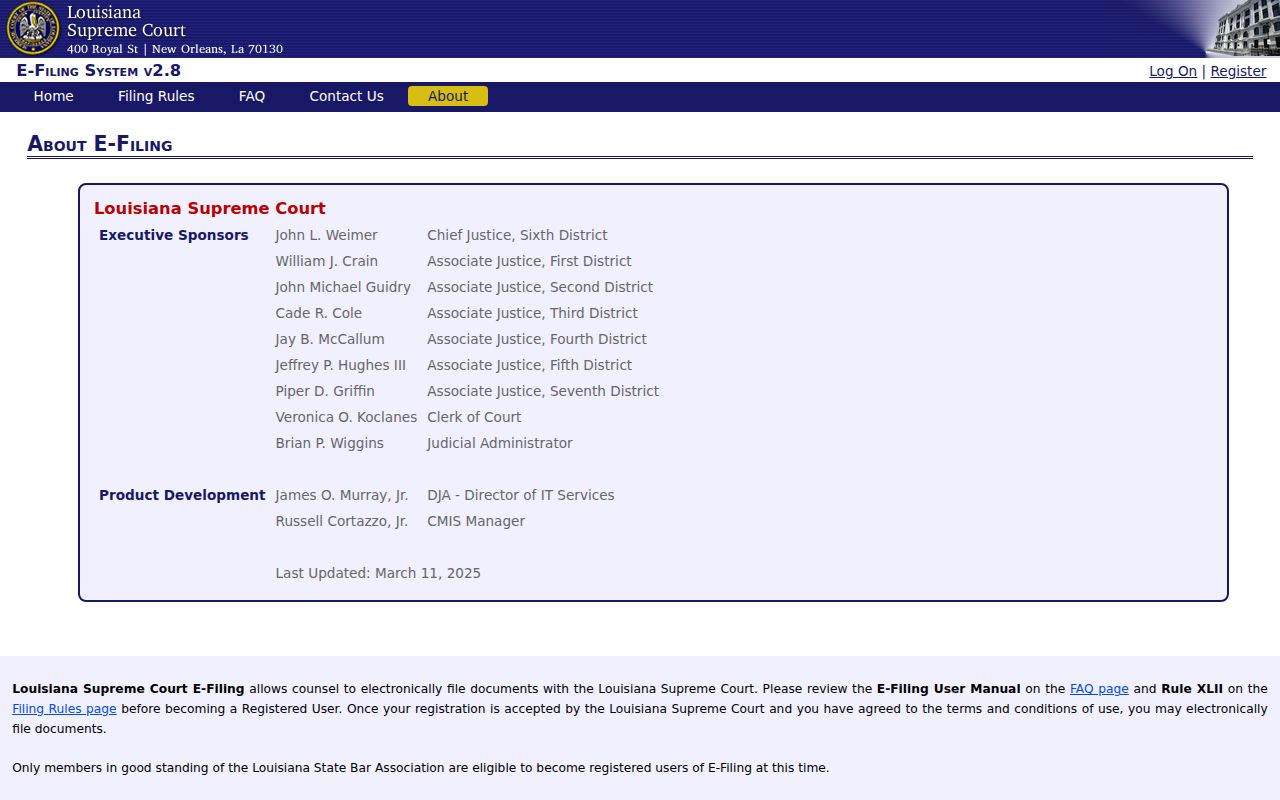
A filing made through Supreme Court CDX stays inside that court's own system. It never substitutes for the parish clerk's trial-court record of the case.
Note: An e-filing receipt only proves submission. It does not promise that the filed image is publicly searchable yet.
Louisiana Appellate and Federal Case Searches Use Separate Portals
Louisiana keeps three kinds of cases in three separate systems. A trial case, its appeal, and a federal case never live in one file. Each of the five Courts of Appeal runs its own search, docket, opinions, and writ information. The appeal gets its own case number and its own clerk. A notice sitting on the trial docket does not open that appellate file for you. Federal cases sit outside the state portal entirely. They live in the district court's CM/ECF system, with PACER as the national access layer on top.
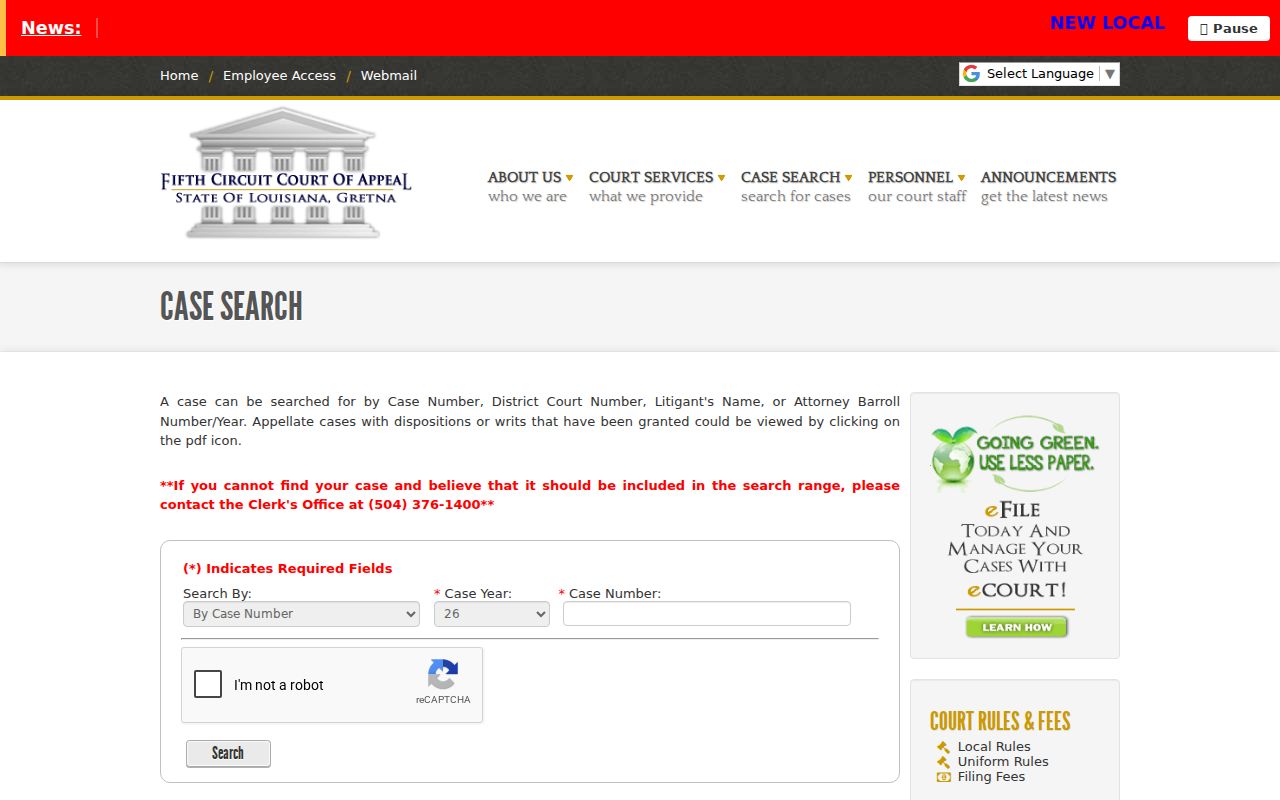
The Fifth Circuit case search lets you query by several fields. You can use an appellate number, district-court number, litigant name, or attorney bar-roll information. That screen proves a trial number can be your way into a separate appellate record. It does not mean every circuit offers the same fields. Stick with the official circuit form and its selected mode. Other Louisiana appellate courts may organize public search differently.
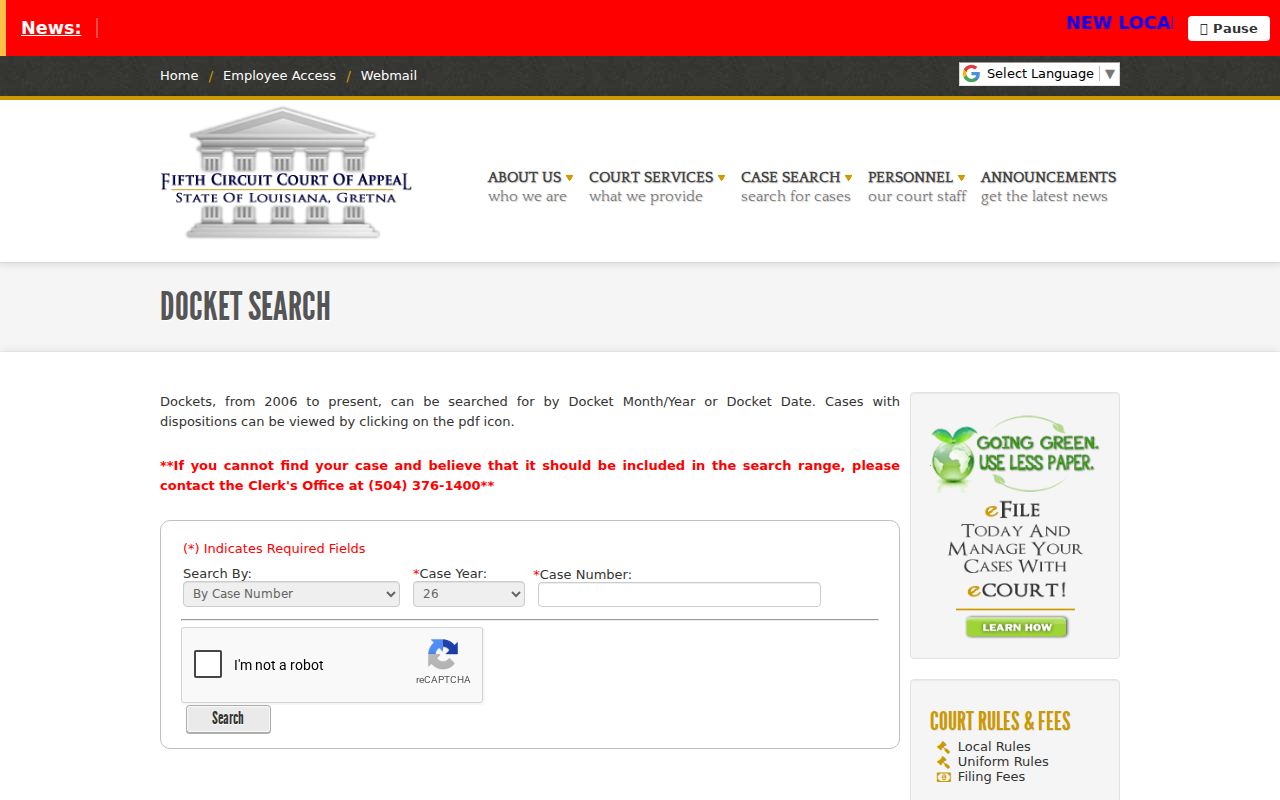
The Fifth Circuit docket search lists available docket dates from 2006 to the present. It offers month, year, or date modes. This date search belongs to that circuit's docket page alone. It is not part of every Louisiana trial-court calendar. For older material or a missing entry, the clerk's office is the place to ask.
Federal filings work differently. Start with the PACER case-search route or the district named in the caption. Louisiana federal cases go to the Eastern, Middle, or Western District. State eClerks results will not cover those files.
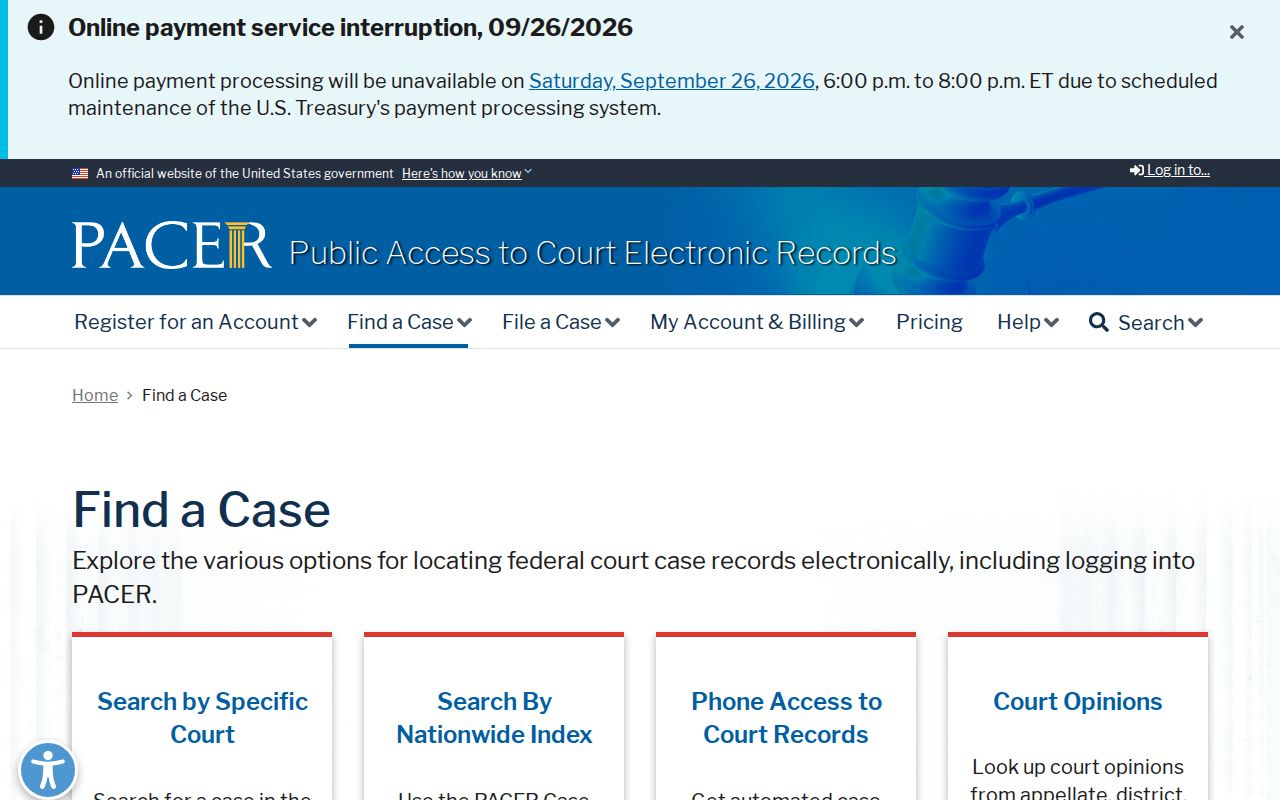
The federal search path is its own track. It stays fully separate from Louisiana state court access.
Statewide Portal vs Parish Docket in Louisiana
Think of the statewide portal as a first index for the categories it names. The parish court docket is the official local history. The clerk holds the actual filings and issues certified copies. Neither layer replaces the other. A statewide search may surface an index record while the local system already holds newer events or documents, and no uniform refresh schedule promises when an item moves from one service to the other.
Use the Louisiana parish directory to reach the clerk or court for the parish and division printed on the case paper. City, mayor's, and justice-of-the-peace courts should be confirmed directly with the named court. The table maps each question to the right layer.
| Question | Statewide Index | Parish or Court Docket |
|---|---|---|
| Where to start | eClerks LA for the specified statewide index categories. | Use when the court or case type is outside the index or the needed detail is local. |
| Full case history | No complete statewide trial docket sheet was identified. | Ask the official court clerk for the case history and minute entries. |
| Filed document | Some image access may be absent, restricted, or fee-based. | Request the named pleading, order, or judgment from its custodian. |
| Certified copy | Index access is not certification. | Local clerk explains certification, price, and delivery. |
| Current status | No statewide refresh interval was verified. | Confirm the latest entry with the court or clerk. |
Louisiana Criminal Minute Access Has a Defined Scope
Louisiana's R.S. 13:5992 builds a minimum electronic access path through LCRAA. It covers minute entries or summaries from criminal cases. Those cases must have been filed on or after January 1, 2020. The eClerks Criminal Search asks you to create an account before its query controls appear. Once the clerk receives the details, more can appear. The statute allows charges, hearings, trial or adjudication, sentence by count, and key case roles.
The law stops well short of full disclosure. It does not require public copies of every motion, indictment, exhibit, warrant, or scanned image. Traffic violations are expressly excluded. One narrow exception covers minute entries in certain juvenile violent-crime cases filed on or after January 1, 2024, unless sealed or expunged. Even so, it does not make juvenile records public across the board. A covered entry may stay hidden. In that case, ask the local criminal clerk how to use the statutory access route.
The text of R.S. 13:5992 defines this disclosure lane. A statewide criminal-minute requirement is not a promise of a complete statewide criminal docket.
Note: This statute sets a narrow public access floor, not a complete case-file disclosure rule.
Act 694 Sets a Louisiana Filing Framework for January 1, 2026
Act 694 of 2024 rewrote Louisiana's civil and criminal electronic-filing and court-record rules. The relevant changes take effect January 1, 2026. Covered filings made by an attorney must go through an approved clerk or LCRAA system. The act does not create one public-facing vendor for every trial court. It is not a blanket order either. No rule says every person must file electronically in every matter.
Local clerks still identify the approved service and keep the official case file. Paper filing options survive in the statutory and rule framework where they apply. The act also tightens handling of privacy and sensitive information. An electronic mandate does not mean every filed image becomes public. Check the local court's current instructions before submitting a case document.
Act 694 of 2024 is the source for the effective date and the electronic-record changes. The public docket stays a separate access layer.
Louisiana Court Technology and History
Louisiana built its court technology in layers. The 1974 Constitution laid out the modern judicial framework. Decades later came the digital pieces. In 2014, Act 741 created LCRAA under R.S. 13:754, and eClerks LA went live on November 9, 2015 with land-record indexes as its first job. The portal grew from there. Broader index access, local e-filing and recording links, alerts, and criminal search services all came later. Each step widened remote access, yet none replaced the case systems that local clerks run themselves.
More change followed. A 2024 statute opened criminal-minute access for cases filed from 2020 onward, and Act 694's electronic filing and court-record changes took effect in 2026. The Office of the Judicial Administrator keeps publishing annual reports and court statistics. Still, Louisiana has no single trial-court system. Local vendors, case-management tools, image rules, and clerk practices differ from parish to parish, and the state makes no guarantee about how often public data refreshes.
The eClerks LA history and services page tells the portal's own story. Just remember that statewide reach does not mean uniform archive depth at every court.
Secure Louisiana Justice Data Is Not a Public Docket
Not every Louisiana system exists for public case lookup. The state's 2025 Supreme Court Annual Report describes a centralized broker server for the Integrated Criminal Justice Information System (ICJIS). Its purpose is secure real-time sharing among justice agencies. That is interagency exchange, not an open public docket feed.
Court reporting and juvenile-family programs draw the same line. DCRS handles authorized statistical reporting, and the statewide FINS database tracks program activity inside confidentiality boundaries. A statistical total is not a case-by-case docket. Neither is a program database. For a named case, return to the court clerk that holds the record and follow that record's access rules.
The 2025 Annual Report covers these administrative systems. Its real-time sharing language refers to secure agency data, not a live public case search.
Note: Administrative data exchanges keep courts running; they do not replace a docket search with the local clerk.